
Love Made Flesh
Notes from the Field, Cerrillos NM

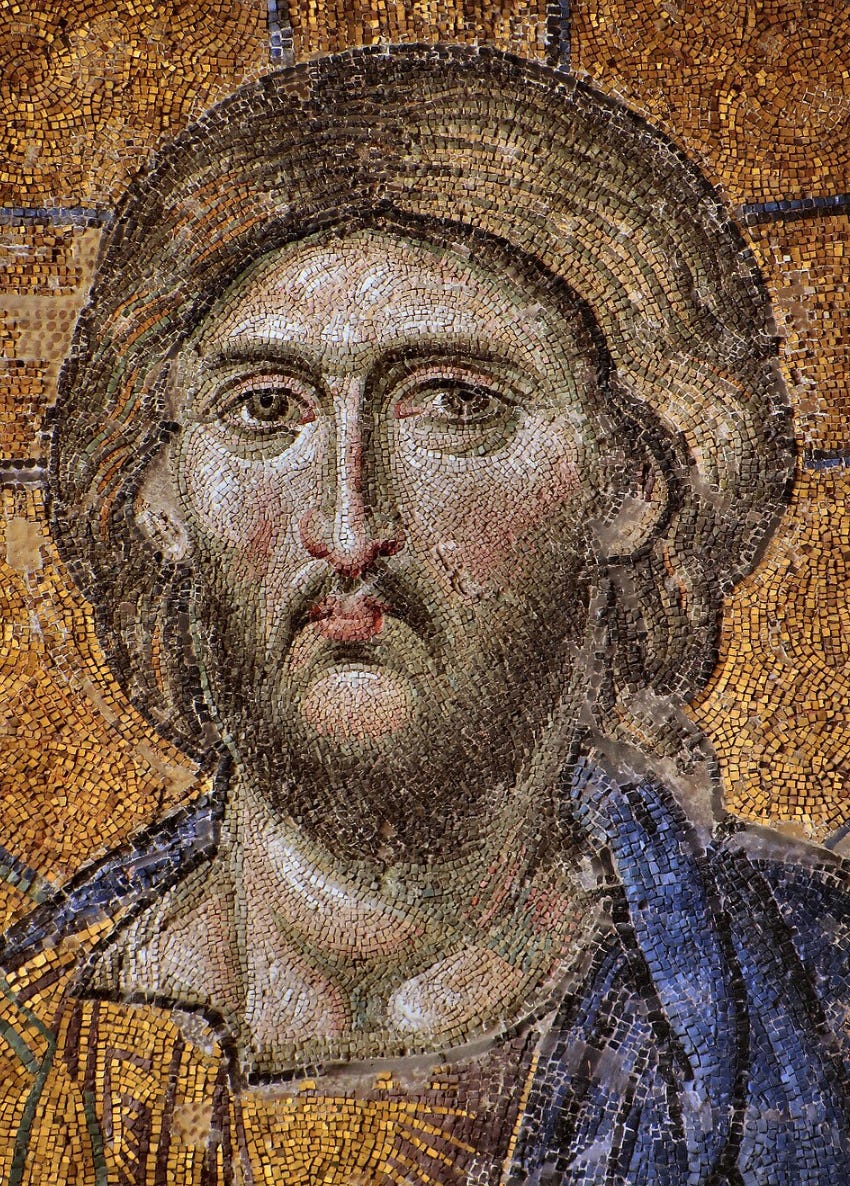
No one embodied love like Jesus. Before the stained glass, before the institutions, there was just a man moving through a brutal occupied world, stopping for people everyone else had already written off. And every time he did, it cost him something.
He didn’t just speak of love. He touched it. Wept with it. Grilled fish on the beach to feed grace to the ones who had failed him.
The miracles he performed weren’t spectacles. They weren’t for fame or attention. They were the overflow of love. Healing, forgiveness, even simple moments of presence came from a compassion that didn’t know how to sit still.
He spent his time with the rejected, the outcasts, the ones the religious and political establishments had already written off. When the gospels say he ate with drunkards and sex workers, remember that in that world sharing a meal meant deep intimacy. Full acceptance. Even you belong here.
I think of the leper in Matthew 8. In that culture leprosy didn’t just mean disease. Society labeled you unclean. Exiled from normal life, exiled from community, exiled even from touch. If someone with leprosy approached a village they had to warn people to keep their distance by shouting the word unclean. Every time he had to shout it, the disease got to introduce him again.
To touch a leper was illegal. It made you ritually unclean too.
As Jesus walked down the road, instead of crying out unclean the man said, If you’re willing, make me clean. He’d heard the stories of Jesus’s miracles.
Jesus could have spoken the words from a distance. Instead he reached out and put his hand on the man’s shoulder. The touch came before the healing. Before a single word. Love re-humanizing him.
Then he said, “I am willing. Be clean.”
And the man was healed. Because that touch reached deeper than his skin.
Then there’s the woman caught in adultery. Dragged into the street. Publicly shamed. Surrounded by men holding stones and accusations. They wanted Jesus to condemn her.
Adultery requires two people. Where was the man?
This wasn’t about justice. It was religious leaders using a woman’s body and shame as bait for a trap.
The mosaic law said she should be stoned. If Jesus says yes, he’s just another man willing to have her killed, and everything he’s been showing about mercy collapses in front of them.
If he says no, he’s a fraud who breaks Moses.
They thought they had him either way. They couldn’t care less about her.
As the tension thickened, Jesus knelt and wrote something in the dirt. What it was nobody really knows.
Then he looked up and said, “Let the one without sin cast the first stone.”
One by one, whatever they saw in the dirt, the men dropped their stones and walked away.
When it was just the two of them he looked at her and said, “Neither do I condemn you. Go and sin no more.”
This was love restoring dignity. Love refusing to let a woman become a public blood sacrifice for male hypocrisy. Love that refused to let her shame become their weapon.
Jesus walked into the temple and went straight to the outer court, the section reserved for Gentiles, immigrants, outsiders who had traveled long distances hoping to find a way to connect with God.
Instead they found money changers charging extortionate rates to exchange Roman coins for temple currency, making it too expensive for poor people to worship. The money changers operated with the temple’s blessing. The priests took a cut. The one place set aside for people on the margins had been turned into a system that profited from their spiritual longing.
Jesus grabbed a whip and flipped the tables.
Coins scattering across the stone floor.
He was furious. And he was right to be. That was love protecting the people no system was protecting.
A week later the establishment killed him.
Roman crucifixion was brutal by design. It was public torture meant to break the human body slowly while sending a message to everyone watching about the cost of defying imperial power.
After being sold out by one of his own, dragged through a rigged trial, beaten, mocked, stripped, and made into a public spectacle of agony… most people hanging there would curse the ones who put them there.
Jesus didn’t.
He said, “Father, forgive them. They don’t know what they’re doing.”
That wasn’t weakness. That was love stronger than pain. Love going deeper than the part of us that wants to hit back.
Jesus gets misread constantly. Reduced to sentiment on one side, weaponized into judgment and political posturing on the other. But look at what he actually did. He put his hand on a man nobody would touch. He sat down with the ones everyone else was trying to push out. He knelt in the dirt for a woman everyone else wanted to kill. He walked into the place where the poor were being robbed in God’s name, cracking a whip and flipping tables. He forgave from inside the pain.
That’s not religion. That’s love with skin on it.
He called it following him.
What he meant was: love like this.
He didn’t just show us what Love looks like in a human body. He showed us who we’re invited to become.
What people argue about is the resurrection. Whether it happened. How it happened. What it means.
I preached a lot of Easter sermons. Most of them trying to prove something. The empty tomb. The evidence. Who saw what. I was really good at it. None of that ever felt like the point.
He revealed himself to women first in a world that didn’t let them testify in court. The first witnesses to the resurrection were people the legal system considered unqualified to witness anything.
That was love rewriting who gets to speak. Who gets believed. Who carries the news that changes everything.
And then I look at what all of them did next.
Something happened that was strong enough to take a ragged, frightened group of people who had just watched their friend get executed by the state… and turn them into people who wouldn’t stop loving like him anyway.
These weren’t people protecting an institution. They had no institution. They just wouldn’t stop.
Something happened that made them keep touching the untouchable. Keep feeding people. Keep walking into prisons and brothels and the homes of people the religious establishment had already condemned. Keep forgiving the ones who were still trying to stop them. Even when it cost them their lives too.
You can debate the mechanics. But you can’t fake that kind of aftermath.
It’s not just that he rose. But that something in him kept rising in them.
Love doesn’t stay buried. It just keeps showing up in whoever’s willing to carry it.
Even after it’s been crushed.
If Easter means anything, maybe it’s this:
That kind of love doesn’t die.
And we’re still being asked what we’ll do with it.
More soon.
Todd
Cerrillos, New Mexico
(where the desert doesn’t care what you believe, only how you live)
Pass this along to someone curious.
What do you imagine Jesus wrote in the dirt? And if it doesn't matter exactly what he wrote, what work is this action doing in the story, beyond what he said with his voice? This is sticking with me.